
Greenbrier County Arrest Log Sources
Greenbrier County publishes no sheriff's 72-hour log or weekly blotter. The best official starting point is the WVDCR Jail Offender Search. Think of it as a current custody tool. It is not a permanent arrest history. Southern Regional Jail holds inmates from seven counties. Check the county, facility, and arresting agency before calling any SRJ record a Greenbrier arrest.
The Daily Incarcerations tool adds date-oriented admission data where its controls permit. WVDCR does not promise how far back those dates reach. A released person may drop out of the current jail search. The police report and court case live on. That gap is why a multi-day arrest inquiry needs more than a single roster.
No complete weekly arrest feed exists. WVDCR shows who is in custody, the arresting agency holds its report, and the court records the case.
Sheriff cases open a FOIA path for requesting records. City arrests go through Lewisburg, White Sulphur Springs, or Ronceverte police. The regional jail never holds a municipal incident narrative.
Read Greenbrier Arrest Reports
Start with the official custody record. Then move to the agency report and court file. A news story can help pin down a date, but it should not settle the question.
- Search WVDCR Jail Offender Search by name and compare date of birth, facility, and other available identifiers.
- Review Daily Incarcerations for the relevant date and Greenbrier context when the interface still offers that date.
- Identify the arresting agency. Ask it for the incident or arrest report and any releasable agency-created photograph.
- Search the West Virginia magistrate system by name or case number, then obtain filings from the proper clerk.
- Use local-news archives only for selected reporting, and verify any claim against the official agency or court.
The same-day arrest view suits a brand-new booking. The multi-day route works better once a daily entry rolls forward. It also helps after a weekend passes. A court filing can also add context the roster lacks. Remember that a custody result and a court case answer different questions.
What Arrest Reports Can Show
Greenbrier County has no standard blotter format, so fields shift from one source to the next. The table simply lists each Greenbrier County arrest as booked.
| Item | Best source and caution |
|---|---|
| Name and admission time | WVDCR daily admissions; admission time may not equal the arrest time. |
| Facility and status | WVDCR jail search; status may change quickly after bond, release, or transfer. |
| Arresting agency and narrative | The sheriff, city police, or State Police report. |
| Charges at booking | An charge, not a conviction or necessarily the final charge. |
| Bond and hearings | Magistrate or circuit court, not a mugshot card. |
| Photograph | A WVDCR profile may show one if available; agency copies depend on law and policy. |
| Disposition | The court docket and order supply the outcome. |
A name alone is a shaky match. Compare birth dates and other official identifiers where lawfully shown. WVDCR warns its data can change fast. It may also lag because of conversion issues. The West Virginia Daily News crime archive adds story-level detail on local cases.

This archive captures selected reporting, not every Greenbrier booking and not current custody.
Weekend Greenbrier Arrest Reports
No official source promises weekend arrests, a set posting hour, or uploads within fixed minutes. WVDCR intake and data publication run as operational processes. Yet the public interface has no stated cadence. Local news runs on editorial timing. A Friday night incident may surface in a story days later. Some bookings never become news at all.
So on weekends and holidays, compare the date-based admissions tool with current jail custody. If a name is missing, verify with the arresting agency or SRJ. Do this before assuming a release. A bond-out can make an active result brief. Transport, identity checks, or paperwork can also delay the first public sign of an arrest. The WVDN jail tag offers another local story index.
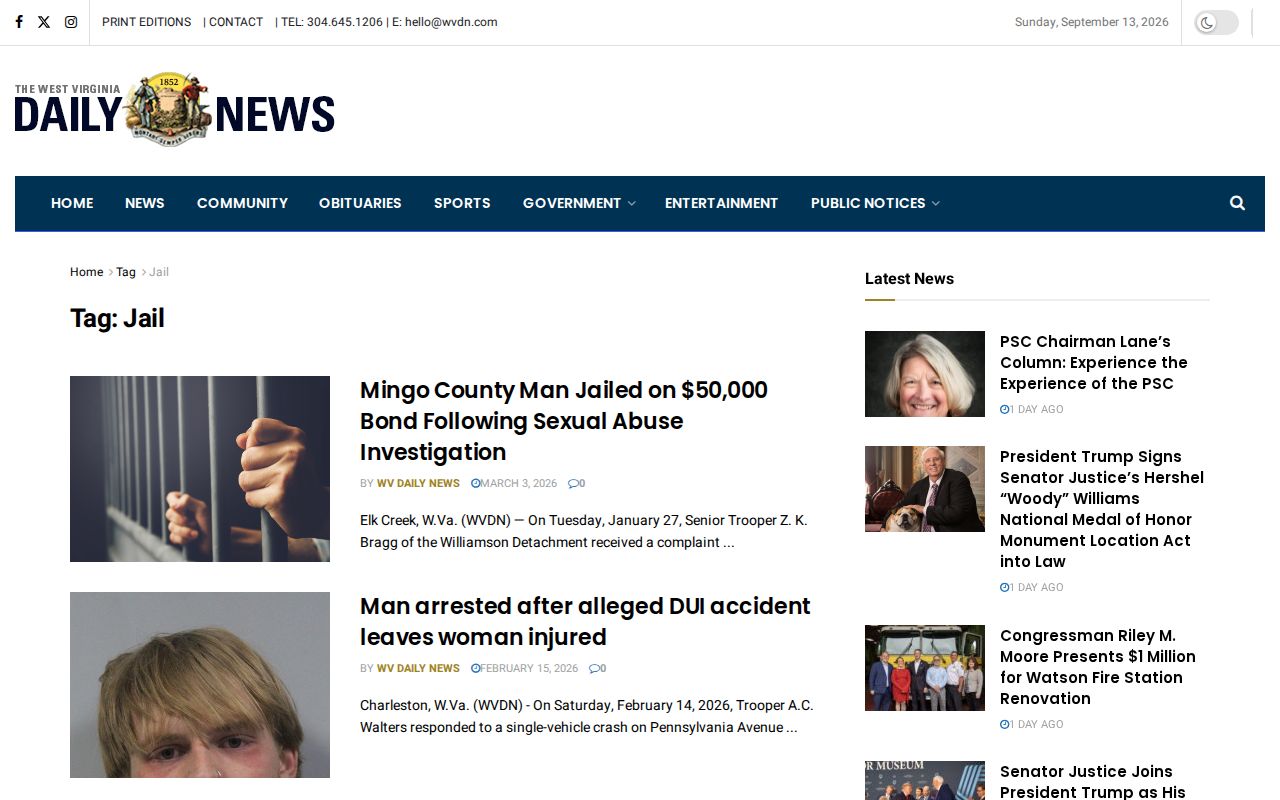
The tag helps for browsing by date. Still, its news selection is not a roster or weekly arrest total. Note: "Cadence not published" is more accurate than claiming a routine that Greenbrier County or WVDCR never promised.
Local News Is Selective
West Virginia Daily News is the strongest local crime and jail archive around. Mountain Messenger covers sheriff, Lewisburg, White Sulphur Springs, Ronceverte, and multiagency cases too. Its Ronceverte warrant story shows the local handoff. City police processed the person, then drove the person to Southern Regional Jail. That is useful context, not a blotter.
Unofficial Greenbrier pages exist on Busted Newspaper, RecentlyBooked, and Arrests.org. They can surface older cards or city labels. They republish material rather than create it. A card can linger after release or after a charge changes. Check their dates, labels, and images against WVDCR, the arresting agency, and the court. Treat none of them as proof of current custody. The RecentlyBooked Greenbrier page appears here only as an unofficial example.
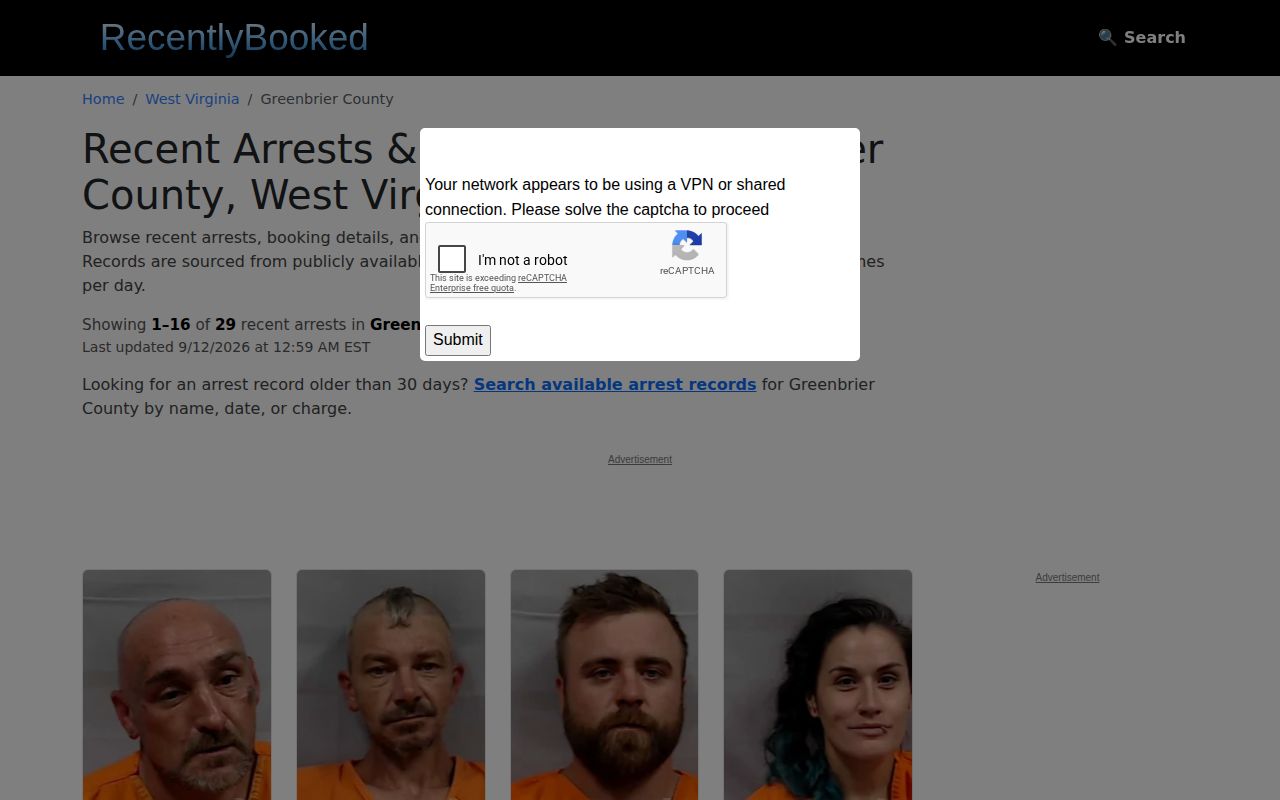
That county index can keep cards past the official active-custody window, so confirm each claim with an official source.
Greenbrier Archives and Retention
Greenbrier County keeps booking records far longer than any website does. The sheriff retention schedule treats Commitment Records as five-year items. It defines them as arrest records for a person committed to jail. Prisoners Reports survive ten years or until audit, whichever arrives later. Fingerprints stay on file while they hold value. Activity reports and radio logs run on their own clocks. None of that tells you how long a photo or a field sits in the WVDCR OIS system online.
Older material lives with the right custodian. A sheriff incident belongs to the sheriff. A town incident belongs to that police department. SRJ intake records move through WVDCR's written FOIA process. Court filings rest with the Magistrate or Circuit Clerk. Whatever the route, a sharp request names the full person and the date range. It should also list the arresting agency, any case number, and the exact report or image you want.
Deep history calls for the West Virginia State Archives, which holds newspaper microfilm and institutional collections. It cannot replace a current booking record, though. Its written research service wants precise names, dates, county, and record series before staff will dig. Work in order: custody search first, then the agency record. Next comes the court outcome. Only then the archive, when age truly warrants it.
When you document an older entry, keep the official URL and the date you checked it. That detail lets a custodian trace the source. It also tells a live result apart from a certified copy.